1952
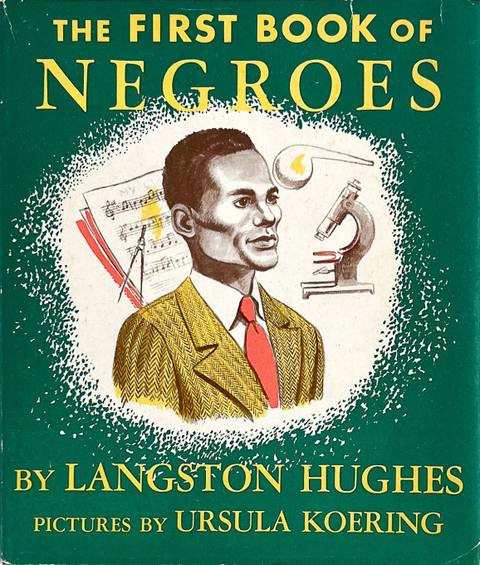
The First Book of Negroes — Langston Hughes, 1952 (First Edition)
First edition of Langston Hughes's inaugural title in his five-volume "First Book" series for children (New York: Franklin Watts, 1952) — a…
89Rare

Published in London by Wishart & Co. in 1934, Negro: Anthology is a monumental 856-page volume edited by Nancy Cunard, compiling essays, poetry, history, art, sociology, and political writings from over 150 international contributors.
The anthology features major Harlem Renaissance figures such as Langston Hughes, Zora Neale Hurston, W. E. B. Du Bois, Arthur Schomburg, and Countee Cullen, alongside voices from the Caribbean, Africa, Europe, and beyond. Boldly bound in black cloth with red stamped titling and lavishly illustrated, the book documents the breadth of Black achievement, cultural identity, and political struggle across the diaspora during a period of global crisis.
Negro: Anthology is one of the most ambitious and wide-ranging compilations of Black life and thought from the early twentieth century, breaking barriers as both a literary and political document. Nancy Cunard, a British heiress turned radical, envisioned the anthology as a weapon against racism, imperialism, and fascism.
The work’s intellectual rigor, scope, and commitment to the Black experience earned it a reputation as a “secular Bible of African culture” and established a model for later anthologies of global Black literature. Many copies were lost when a warehouse holding unsold stock was bombed during the Blitz, enhancing the rarity and mystique of the first edition.
Validate this item’s Black Grail Score with verified heritage data
Heritage verification opening soon
1952
First edition of Langston Hughes's inaugural title in his five-volume "First Book" series for children (New York: Franklin Watts, 1952) — a…
1861
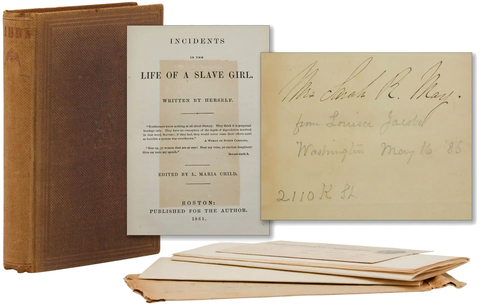
This first-edition copy of Incidents in the Life of a Slave Girl (Boston, 1861) is an exceptional presentation copy given by Harriet Jacobs…
1904
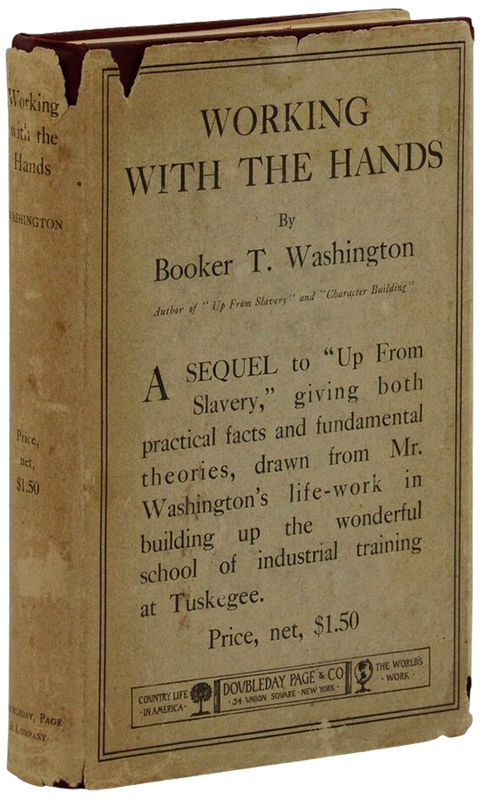
Working with the Hands is a 1904 nonfiction work by Booker T. Washington , published as a sequel to his celebrated autobiography, Up from S…
1855
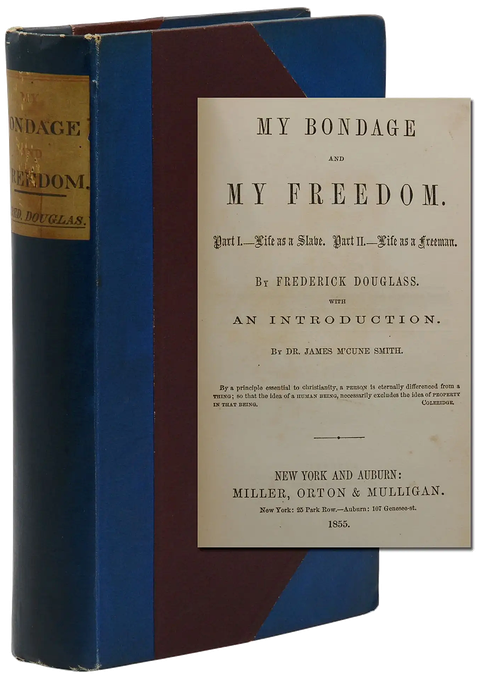
Frederick Douglass’s My Bondage and My Freedom is the landmark second autobiography of America’s most influential abolitionist and orator.…