Historical Documents

    Access letters, documents, and historical papers that tell the story of Black heritage.

    7 Resources
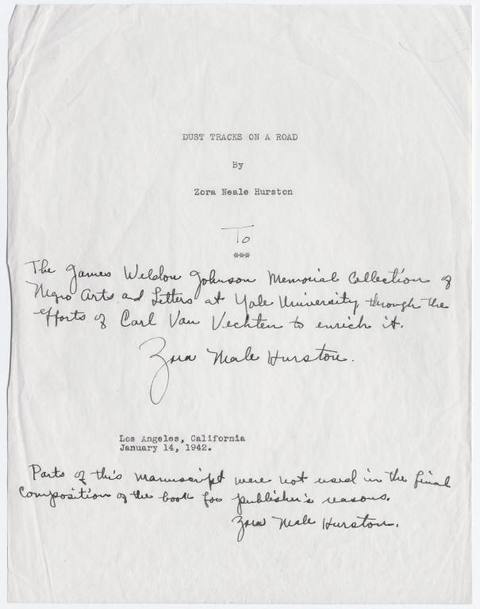
    Zora Neale Hurston Draft Pages from a Major Work
    Historical Documents
    Early 20th Century

    This extraordinary archival lot features original handwritten and typed draft pages from two landmark works by Zora Neale Hurston. The handwritten page (top) is a densely written manuscript leaf from her 1942 autobiography Dust Tracks on a Road, showing her fluid, expressive longhand with revisions and strikethroughs as she crafts vivid scenes of Southern Black life, death, and community. Accompanying it is the signed presentation title page of Dust Tracks on a Road, inscribed by Hurston in Los Angeles on January 14, 1942, donating portions of the manuscript to the James Weldon Johnson Memorial Collection at Yale University. Also included is the rare typed title page of the 1930 play Mule Bone: A Negro Folk Comedy, co-authored with Langston Hughes, noting its composition in Westfield, New Jersey, in Spring 1930, with a 1964 registered mail notation.

    Historical Significance:

    These are primary-source working documents from one of the most important voices of the Harlem Renaissance. Dust Tracks on a Road is Hurston’s celebrated autobiography, and these pages capture her in the act of creation — blending folklore, personal memory, and sharp cultural observation. Mule Bone, her collaboration with Langston Hughes, is a foundational (though famously contentious) work of African American theater, attempting to bring authentic Black vernacular and folk humor to the American stage. Together, these draft pages represent the raw creative process behind two major 20th-century Black literary achievements and stand as tangible links to Hurston’s genius as novelist, folklorist, anthropologist, and playwright.

    African American
    James Baldwin Manuscript Letter on Race and America
    Historical Documents
    Mid-Century Era

    This powerful archival group features three original James Baldwin-related manuscript items. The centerpiece is a handwritten page from Baldwin’s essay “The Negro Writer’s Vision of America,” written in his distinctive blue ink script, where he reflects on the role of Black artists and states that his models as a writer are “black musicians & dancers” rather than other writers. Also included is the heavily inscribed title page and cast list from the 1965 production of Baldwin’s play The Amen Corner, filled with warm personal dedications and signatures from Baldwin (“Jimmy”) and others involved in the production. A third item is a personal handwritten letter dated January 17, 1977, offering intimate insight into Baldwin’s circle and creative process.

    Historical Significance:

    These are primary working documents from one of the most eloquent and fearless voices in 20th-century American literature. The essay page captures Baldwin at his philosophical best — articulating his belief that Black artistic tradition draws deeply from music, dance, and lived experience rather than European literary models. The Amen Corner (his first major play) explores themes of faith, family, and Black church life in Harlem, and the inscribed pages reflect the tight-knit artistic community surrounding its production. Together, these manuscripts provide rare, tangible evidence of Baldwin’s creative mind and his lifelong commitment to exploring race, identity, and the Black American experience with unflinching honesty.

    African American
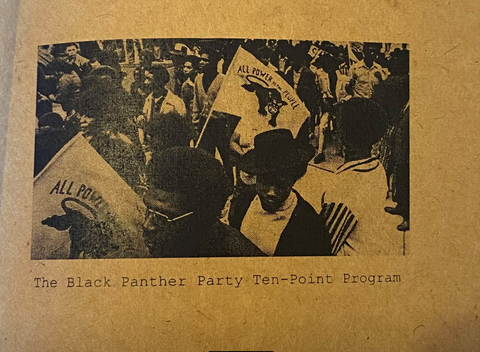
    Black Panther Party Ten-Point Program Broadside (Original Printing)

    This rare original 1966 broadside prints the foundational “What We Want / What We Believe” Ten-Point Program of the Black Panther Party for Self-Defense. Typically produced as a single-sheet poster on legal-size or larger paper (often 8.5" x 14" or similar), it features the complete ten-point platform in bold typewritten text, frequently accompanied by the iconic photograph of Huey P. Newton seated in a wicker chair holding a shotgun and spear, or the leaping black panther logo.

    Historical Significance:

    This is the seminal political manifesto of the Black Panther Party, one of the most influential and revolutionary documents in modern African American history. Articulating demands for freedom, full employment, decent housing, education, an end to police brutality, and Black self-determination, it crystallized the Party’s ideology of armed self-defense, community control, and international solidarity. As an original printing from the Party’s earliest days in Oakland, this broadside represents the birth of one of the most powerful grassroots political organizations of the 20th century and remains a primary source for understanding the Black Power movement.

    African American
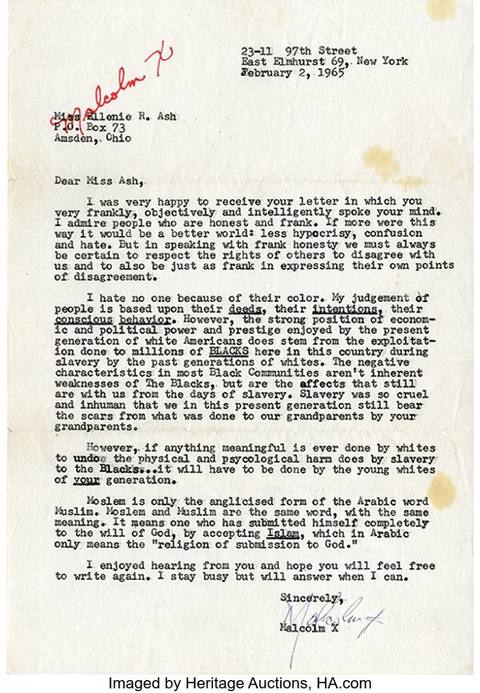
    Malcolm X Typed Letter Signed ("Malcolm X"), February 2, 1965

    This rare original typed letter signed by Malcolm X ("Malcolm X"), dated February 2, 1965, on his personal New York letterhead (10 ⅜" x 7 ¼"), is addressed to Miss Ellenie R. Ash of Amsden, Ohio. Written in crisp type with Malcolm X’s bold red script signature and “Malcolm X” notation at the head, the letter responds thoughtfully to a correspondent, addressing themes of honesty, race, slavery’s lasting scars, and his evolving views on religion and Black self-determination. The single-page document shows typical mailing folds and light aging, with clear, legible text and a strong signature.

    Historical Significance:

    Written less than three weeks before his assassination on February 21, 1965, this letter captures Malcolm X during a transformative period — shortly after his break with the Nation of Islam and his pilgrimage to Mecca. In it, he articulates nuanced ideas on race, the psychological impact of slavery, and the true meaning of Islam, offering a direct window into his philosophy as he sought to unify and empower Black communities. As one of the most important voices of the 20th century, Malcolm X’s signed correspondence from this critical window is exceptionally scarce and historically vital.

    African American
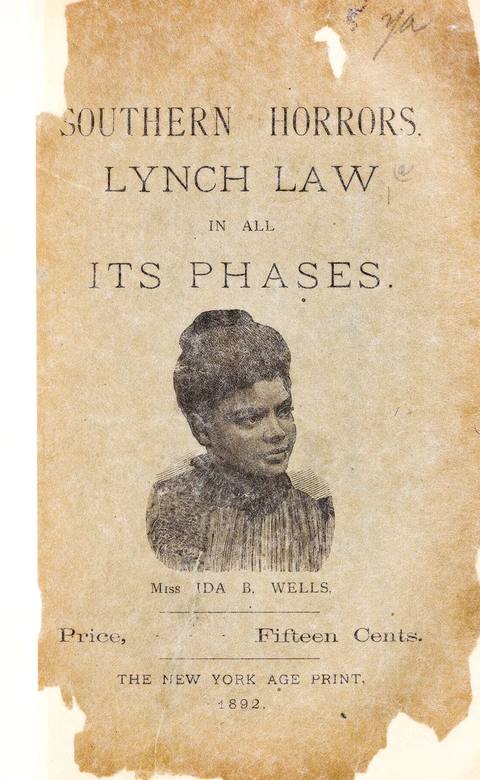
    Ida B. Wells Anti-Lynching Pamphlet (1892)
    Historical Documents
    Early 20th Century

    Ida B. Wells’s anti-lynching pamphlet Southern Horrors: Lynch Law in All Its Phases is one of the most powerful documents of the early civil rights movement. Published in 1892, the pamphlet exposed the brutal reality of lynching in the United States and challenged the false narratives used to justify racial violence. Wells used investigative journalism and documented evidence to reveal that many lynching accusations were fabricated or exaggerated. Her fearless reporting helped bring international attention to racial terror in America.

    Historical Significance:

    Wells’s anti-lynching campaign helped lay the groundwork for future civil rights activism. Her investigative work represented one of the earliest examples of data-driven journalism used to challenge racial injustice.

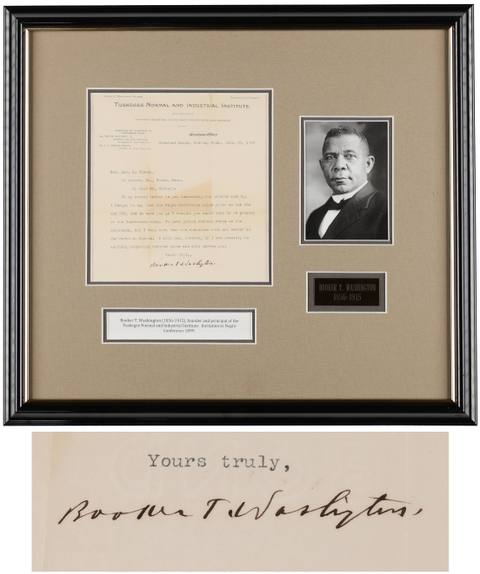
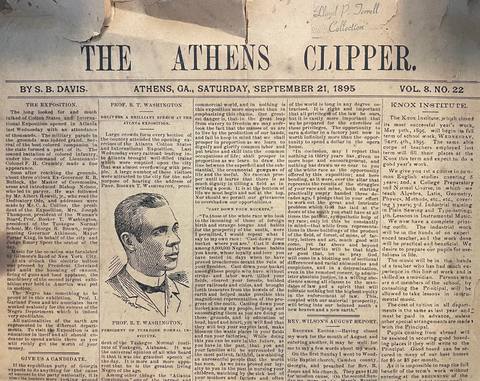
    The Athens Clipper: Booker T. Washington’s 1895 Atlanta Exposition Speech

    This is an original newspaper dated September 21, 1895, from The Athens Clipper (Athens, Georgia), reporting on Booker T. Washington’s celebrated speech at the opening of the Atlanta Cotton States and International Exposition.The front page includes a rare illustration and transcription of Washington’s address, alongside coverage of Black educational institutions such as the Knox Institute.

    Historical Significance:

    This document captures one of the earliest published records of Washington’s “Atlanta Compromise” speech, in which he advocated for Black economic progress and social pragmatism within the segregated South. His words profoundly influenced Black leadership, education, and civil rights debates for generations.The newspaper also provides insight into the perspectives of Black communities in post-Reconstruction Georgia and highlights the active presence and self-advocacy of Black institutions such as the Knox Institute during the late 19th century.

    Johnson Products Co. 1969 Stock Certificate
    Historical Documents
    Contemporary Era

    This is an original Johnson Products Co., Inc. stock certificate, printed with the company’s 1969 corporate seal marking its official incorporation in Delaware. Issued after Johnson Products became the first Black-owned business traded on the American Stock Exchange in 1971, this document represents both a share of ownership and a pivotal moment in U.S. business and cultural history.

    Historical Significance:

    Johnson Products Co., Inc., founded by George E. Johnson, Sr. in 1954, was a trailblazer in the Black haircare industry. Its 1971 listing on the American Stock Exchange broke racial barriers in the corporate sector, inspiring generations of Black entrepreneurs and serving as a key milestone in economic empowerment. Johnson Products also revolutionized marketing by sponsoring culturally iconic media and championing Black pride movements during a pivotal era.