 Black Grail Collection
1968
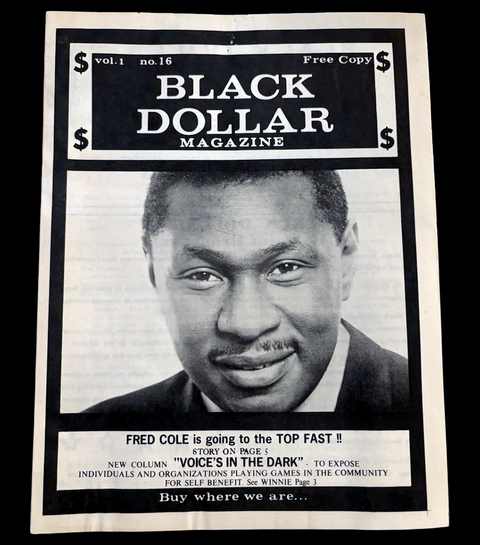
Black Dollar Magazine (1968)
An exceptionally rare surviving issue of Black Dollar Magazine, a Black-owned economic empowerment publication that debuted May 1, 1968 in…
81Rare

Debut issue of SOUL – America’s Most Soulful Newspaper, the pioneering Los Angeles–based Black music newspaper founded by Ken and Regina Jones in partnership with R&B station KGFJ. Published April 14, 1966, this first issue was sold for 15¢ and printed in a run of roughly 10,000 copies, which sold out in under a week.
The cover delivers an uncompromising headline—“White Artists Selling Negro ‘Soul’”—above juxtaposed photos of James Brown (“Message for Stones”) and Mick Jagger (“Listen—Don’t Look!”), calling out the appropriation of Black soul music by white performers. Inside, the paper reports on Black recording artists, industry news, charts, and community items, offering the kind of serious, fact‑based coverage Black musicians rarely received in the mainstream press.
SOUL quickly expanded from a local KGFJ edition into a national network of co‑branded issues with R&B stations in some 30 markets, becoming a primary news source for labels, publicists, and fans tracking the rise of soul, funk, and early R&B‑driven pop. This inaugural number marks the starting point of a publication that would chronicle the careers of artists from James Brown and Aretha Franklin to the Jackson 5 and Michael Jackson across more than 350 issues through 1982.
First soul‑music newspaper. SOUL is widely regarded as the first dedicated soul‑music news publication, created specifically to document Black artists and Black popular culture at a time when mainstream music magazines marginalized or sensationalized them.
Launch of a Black‑run media institution. Founded by Black journalists Ken and Regina Jones in direct response to the Watts Rebellion, SOUL was conceived as a vehicle for self‑representation—“some kind of newspaper to highlight entertainment and black music in particular”—and grew into a nationally distributed institution of Black entertainment journalism.
Iconic critique of cultural appropriation. The first issue’s headline, “White Artists Selling Negro ‘Soul,’” is one of the sharpest contemporary print attacks on white exploitation of Black musical forms, explicitly contrasting James Brown’s authenticity with the Rolling Stones’ success and demanding recognition and economic justice for Black creators.
Blueprint for radio‑press synergy. SOUL’s KGFJ partnership—free on‑air promotion in exchange for station branding and ad space—became a model for Black‑oriented media collaborations, helping the paper reach a circulation of around 125,000 across roughly 30 major markets by the late 1960s.
Primary record of Black music history. Over its 1966–1982 run, SOUL provided first‑run interviews, reviews, and photography that now serve as primary documentation of the growth of soul, funk, and crossover Black pop; many artists’ earliest or most candid media appearances appeared in its pages.
As the inaugural issue, this copy represents the moment SOUL’s experiment in Black‑controlled music journalism moved from idea to printed reality—making it a foundational artifact for any serious collection centered on Black media, music history, or the politics of cultural ownership.
Validate this item’s Black Grail Score with verified heritage data
Heritage verification opening soon
Black Grail Collection1968
An exceptionally rare surviving issue of Black Dollar Magazine, a Black-owned economic empowerment publication that debuted May 1, 1968 in…
1988
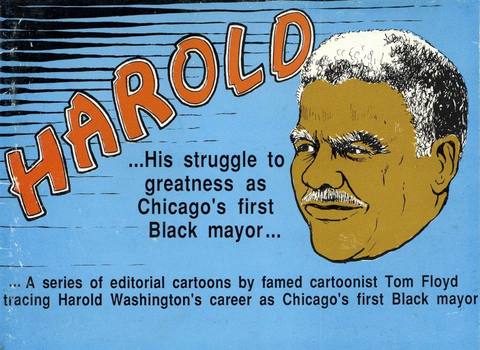
Harold , published in 1988 by Tom Floyd Visuals , is a rare editorial cartoon collection dedicated to chronicling the historic political ca…
 Black Grail Collection
1946
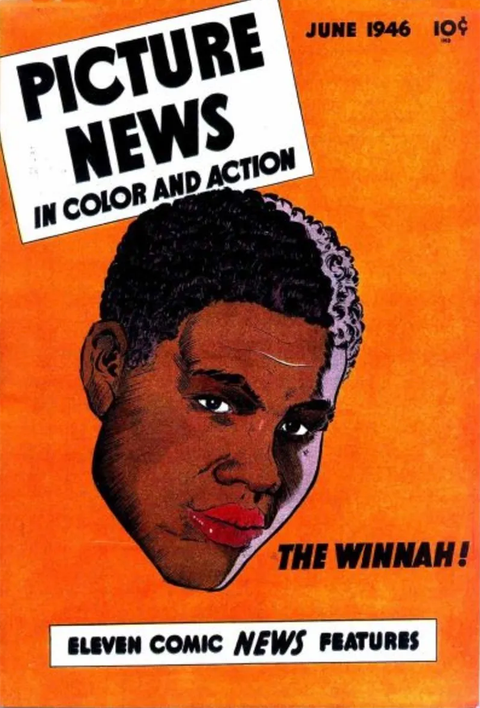
Published in June 1946 by Lafayette Street Corporation, Picture News #6 is a landmark non‑fiction comic that spotlights heavyweight boxing…
 Black Grail Collection
1941
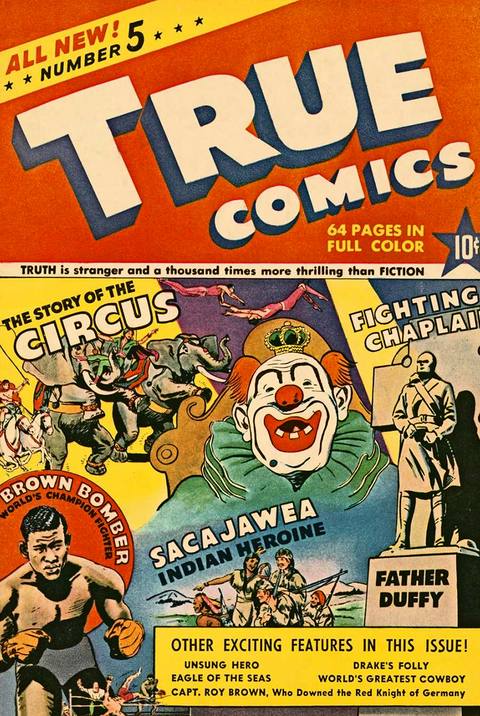
True Comics #5 is a 64-page educational comic published in 1941 by the Parents’ Magazine Institute, best known for mixing nonfiction storie…