Relics & Memorabilia
Explore personal effects and cultural artifacts from significant figures and movements.

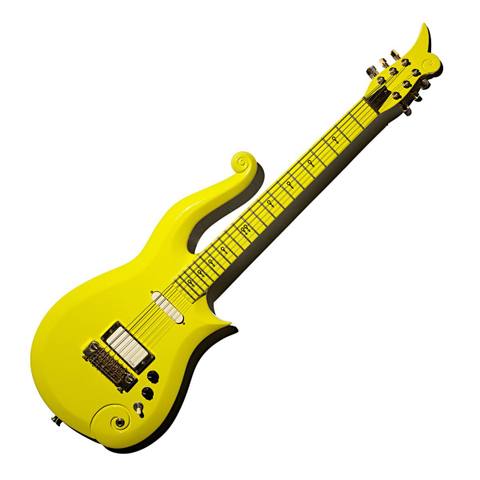
The Yellow Cloud Guitar is one of the most iconic instruments associated with musician and cultural innovator Prince. Designed by Minneapolis luthier Dave Rusan in the early 1980s, the guitar features a distinctive cloud-shaped body finished in bright yellow with bold blue accents. The instrument became a defining visual element of Prince’s stage presence during the Purple Rain era, appearing in concerts, promotional imagery, and performances that helped cement his status as one of the most influential artists in modern music. Its unusual shape and vibrant design reflected Prince’s boundary-breaking artistic style, blending theatrical aesthetics with virtuoso musicianship.
The Yellow Cloud Guitar is closely tied to Prince’s explosive rise to global fame during the mid-1980s, a period when he redefined the possibilities of popular music by blending funk, rock, pop, and soul into a singular artistic vision. Instruments like the Yellow Cloud guitar became part of his larger visual identity, helping transform live concerts into dramatic, visually distinctive performances. Prince’s influence extended far beyond music, shaping fashion, performance art, and the broader cultural landscape. As one of the most recognizable instruments associated with him, the Yellow Cloud guitar stands as a symbol of artistic originality and the revolutionary impact Prince had on modern music.

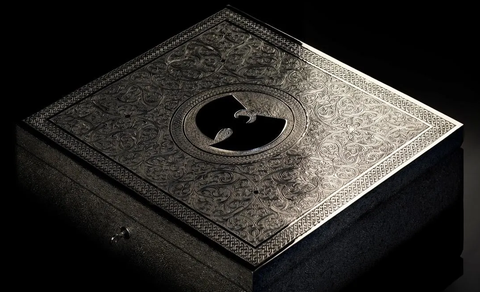
Once Upon a Time in Shaolin is the rarest hip-hop album ever created, serving simultaneously as an art object, a musical statement, and a high-profile collectible. Produced in secrecy from 2006 to 2013, the double album was pressed as a single copy, enclosed in an ornate nickel-silver box sealed with the Wu-Tang Clan’s wax insignia, and accompanied by leather-bound liner notes. Its creation sought to counter the devaluation of music in the digital era by restoring it to the realm of fine art. The album sold in 2015 for $2 million to Martin Shkreli, was later seized by the U.S. government following his conviction, and resold in 2021 for a reported $4 million to PleasrDAO, a digital art collective. Legal restrictions prohibit its commercial release until 2103, amplifying its mystique and cultural legacy.
This album stands as the ultimate “Black Grail” of hip-hop, embodying unprecedented scarcity, record-breaking auction value, cultural controversy, and a narrative that blurs the boundaries between music, art, and law. The story of its secret recording, high-profile ownership, and deliberate exclusivity represents a bold redefinition of how Black art and intellectual property can be valued, protected, and celebrated. Wu-Tang’s vision continues to shape conversations around access, collecting, copyright, and the meaning of music ownership as a singular artistic experience.

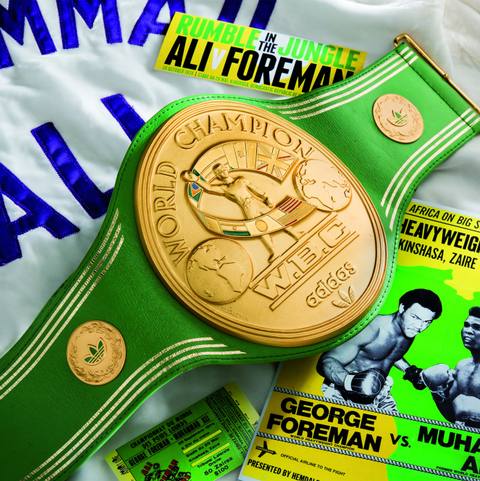
This is the original WBC Heavyweight Championship belt awarded to Muhammad Ali following his legendary victory over George Foreman in the “Rumble in the Jungle,” Zaire, October 30, 1974. Crafted with green leather, gold-hued metalwork, and adorned with enamel international flags, this belt served as the ultimate symbol of boxing supremacy for Ali's second reign as champion. The championship bout restored Ali’s undisputed status, reversing years of exile and adversity that followed his refusal to be drafted into the Vietnam War. The belt is closely associated with numerous photos from Ali’s historic defenses, and, alongside event tickets and artifact provenance, it carries an unmatched legacy of athletic and cultural impact.
This belt is tangible evidence of one of the most famous matches and comebacks in sports history, marking Ali’s triumphant return to the pinnacle of the fight world. “The Rumble in the Jungle” transcended boxing, symbolizing resilience, intelligence, and societal progress amid a backdrop of global racial and political tensions. Ali’s improbable victory over the formidable Foreman remains a defining episode of twentieth-century sport, with this belt cementing his legacy as not just a champion, but a transformative figure in American and world history.

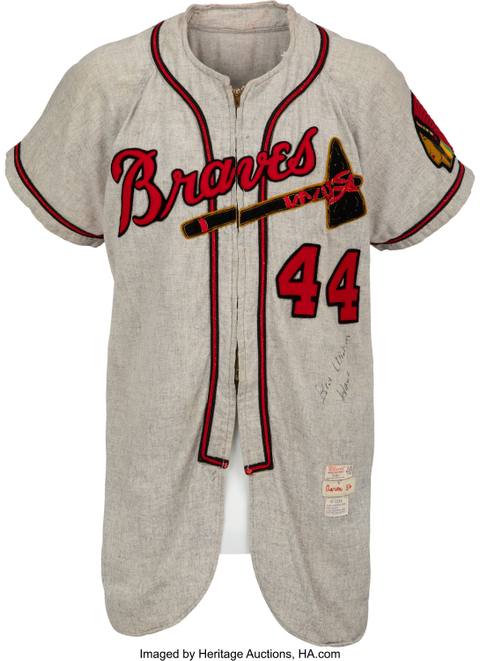
This is the authentic Milwaukee Braves road grey jersey custom tailored for Hank Aaron during his historic 1954 rookie season, with Aaron's iconic “Braves” tomahawk chest script, patch, and number “44” on the reverse. Originally featuring the number “5,” which Aaron wore as a rookie before switching to 44 in 1955, this flannel jersey shows evidence of team-issued alterations and superb wear, perfectly photo-matched to images of Aaron in both his rookie campaign and 1955 spring training. Featuring a vintage black sharpie signature from Aaron (“Best Wishes, Hank Aaron”) and MEARS A8.5 authentication, it stands among the most important single-player artifacts in baseball, representing Aaron’s climb from the Negro Leagues to Major League stardom and ultimate pursuit of Babe Ruth’s home run record.
Worn by the last active former Negro League player, this jersey embodies Aaron’s first big league steps toward a barrier-breaking Hall of Fame career marked by brilliance and resilience in the face of adversity. Its photo-match authenticity links the garment directly to significant moments of integration and achievement in sports, reinforcing Hank Aaron’s enduring legacy as one of the greatest and most influential athletes in American history. No other Aaron rookie jersey has been matched so rigorously or sold for a higher price, making it both an athletic and cultural touchstone. Photo-matched and signed by Hank Aaron as a rookie, this MEARS A8.5 jersey sold for $2,100,000 at Heritage Auctions in August 2024—the most valuable Hank Aaron jersey ever auctioned.

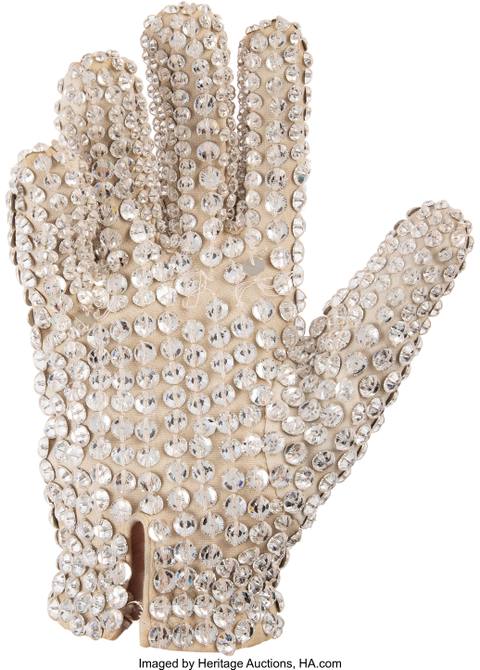
This original, white glove, lavishly studded with Swarovski crystals and designed by famed costumer Bill Whitten, was personally worn by Michael Jackson on stage during the Jacksons’ record-shattering 1984 Victory Tour. Featuring a wrist hook fastener and Whitten’s maker label stitched inside, the glove exhibits telltale signs of authentic stage use, including minor soiling, three missing crystals, and loose threads. The glove was directly gifted by Jackson to concert production associate David Miller, and it includes a detailed Letter of Authenticity and COA from Heritage Auctions, confirming its direct provenance and museum-level collectibility.
The crystal glove is one of the most iconic pieces of Michael Jackson’s career and global pop culture—a visual signature as recognizable as anything in twentieth-century music. First introduced in his legendary Motown 25 performance and perfected during the Victory Tour, Jackson’s single glove became a symbol of his artistic innovation, virtuosity, and unique persona. Memorabilia from Jackson’s peak period remains in tremendous demand, and stage-worn gloves, especially with ironclad origin, are considered “holy grail” artifacts by collectors and music historians.

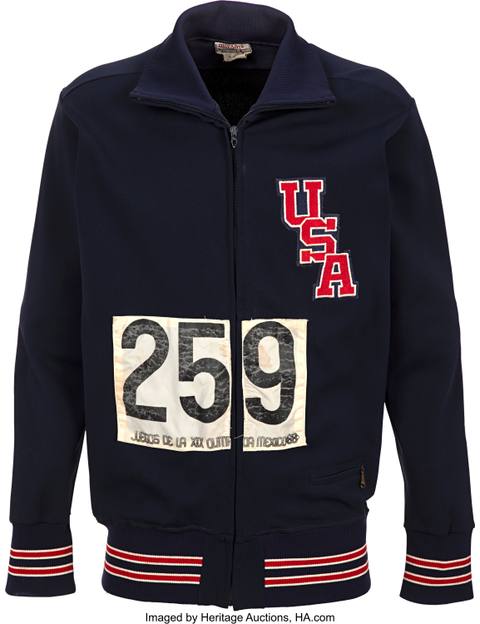
This is the official USA track jacket worn by John Carlos during the medal ceremony at the 1968 Mexico City Olympics, where he joined Tommie Smith in a famous silent protest. The jacket is constructed from blue knit material with red, white, and blue stripes, the classic "USA" over the heart, and the athlete's number patch, as seen in historic photographs from the event.
The 1968 Olympics Black Power salute became a transformative moment in sports and civil rights history. On October 16, 1968, Tommie Smith and John Carlos entered the podium after the 200-meter race, each raising a black-gloved fist as the U.S. anthem played. They wore black socks without shoes for African American poverty, a scarf for pride, and beaded necklaces to honor victims of racial violence. Their protest was planned as a statement against racial and social injustice, rooted in the Olympic Project for Human Rights led by Dr. Harry Edwards. Smith and Carlos faced immediate suspension from the Olympic team and were vilified by many, but their act drew worldwide attention to issues of discrimination and united sports with social justice activism. The image of their stance still resonates, reminding people of the power and responsibility athletes have to spark change. Their willingness to take meaningful action under the glare of an international audience continues to inspire social movements today.