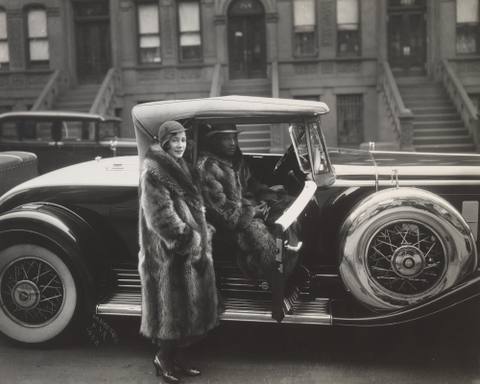
1932
James VanDerZee – Couple in Raccoon Coats (1932)
James VanDerZee’s Couple in Raccoon Coats is one of the most celebrated photographic portraits of the Harlem Renaissance. The image depicts…
86Rare

Gordon Parks’ American Gothic, Washington, D.C. is one of the most powerful photographs of the 20th century. The image portrays Ella Watson, an African American cleaning woman employed by the federal government, standing solemnly before an American flag while holding a broom and mop. Parks intentionally modeled the composition after Grant Wood’s famous 1930 painting American Gothic, but replaced the rural white farmers with a Black domestic worker to highlight the stark realities of racial inequality in the United States. The photograph was taken while Parks was working for the Farm Security Administration, where he was tasked with documenting American life during the Great Depression and World War II era. The resulting image is both a striking portrait and a quiet protest against the contradictions between American ideals and the lived experiences of many Black citizens.
This photograph marked a turning point in Gordon Parks’ career and helped establish him as one of the most influential photographers of the 20th century. At a time when African Americans were rarely represented in positions of dignity or complexity in the national media, Parks’ work offered a powerful and humanizing perspective. American Gothic became an enduring visual critique of segregation and systemic inequality, resonating deeply during the early civil rights era. The photograph also demonstrated how documentary photography could function as a form of social commentary and political expression. Today it is widely regarded as one of the most important photographic works addressing race and identity in American history.
Validate this item’s Black Grail Score with verified heritage data
Heritage verification opening soon
1932
James VanDerZee’s Couple in Raccoon Coats is one of the most celebrated photographic portraits of the Harlem Renaissance. The image depicts…
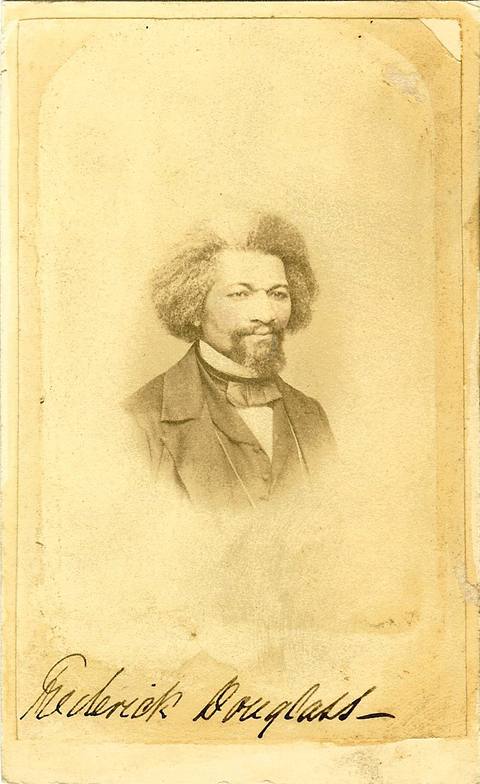
1862
A boldly signed carte-de-visite photograph of Frederick Douglass — "Frederick Douglass" in his full hand beneath his image — taken at the P…