1972
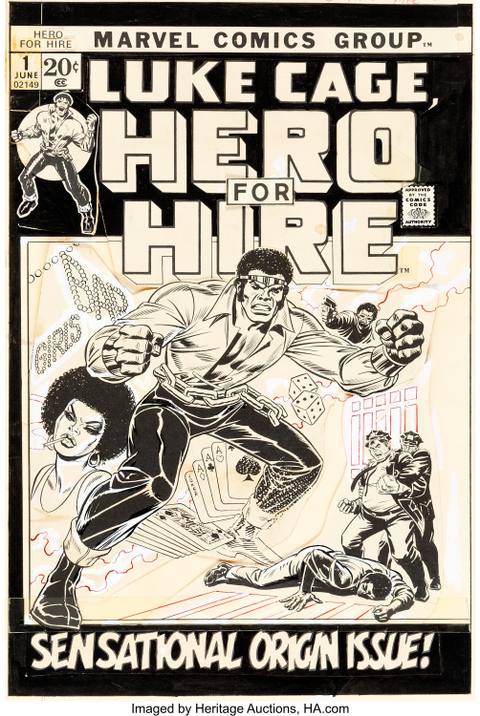
John Romita Sr. Hero for Hire #1 Cover Original Art
This is the original cover art for "Hero for Hire" #1, which marks the debut of Luke Cage, Marvel’s first Black superhero to star in his ow…
94Legendary

Resurrection (1966) is a square acrylic and graphite on canvas by Alma Thomas, composed of concentric yet irregular rings of vivid color set against a bright white ground. Short, mosaic‑like strokes of yellow, red, blue, green, and violet form pulsing bands that radiate outward, creating the sensation of a glowing sunburst or rippling wave of light. The layered “Alma lines”—Thomas’s signature dabs of color—give the painting a dynamic, almost musical rhythm, while the central yellow forms suggest a luminous core that visually expands beyond the canvas edge. Completed the year she retired from teaching, the work reflects Thomas’s late-career embrace of pure abstraction and her fascination with nature, light, and spiritual transformation.
Resurrection is celebrated as a breakthrough work in Thomas’s mature style and is often cited as one of her earliest and most focused concentric-circle compositions. The painting crystallizes her shift from representational scenes to optical, color‑driven abstraction, turning observations of gardens, sunlight, and seasons into a powerful, nonfigurative meditation on renewal. In 2015, the work was acquired for the White House Collection and installed in the Old Family Dining Room during the Obama administration, making Thomas the first African American woman artist represented in the permanent White House art collection. Its placement in a central ceremonial space signaled a deliberate re-centering of Black women’s creativity within the visual narrative of American history and state power.
Validate this item’s Black Grail Score with verified heritage data
Heritage verification opening soon
1972
This is the original cover art for "Hero for Hire" #1, which marks the debut of Luke Cage, Marvel’s first Black superhero to star in his ow…
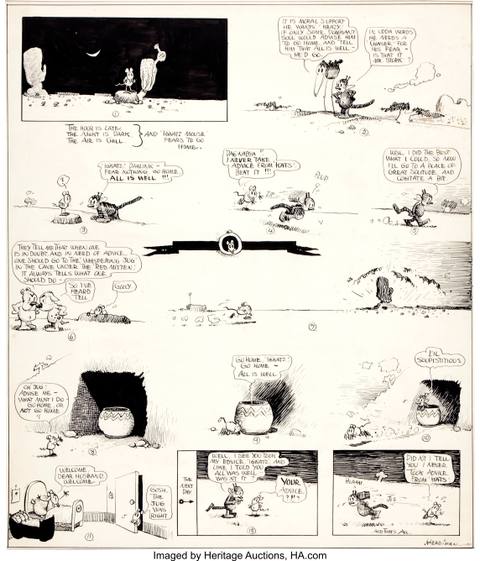
1918
This original Sunday comic strip artwork by George Herriman, dated June 23, 1918, showcases the classic trio of Krazy Kat, Ignatz Mouse, an…
 Black Grail Collection
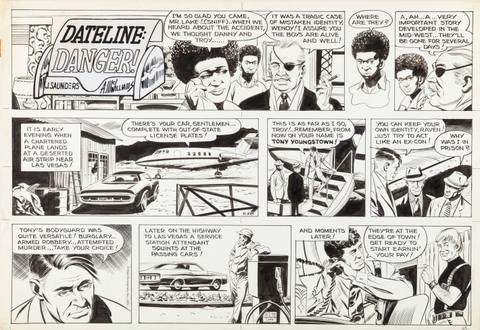
1970
"Dateline: Danger!" Daily Comic Strips Original Art consists of the hand-drawn, published daily newspaper strip panels from the groundbreak…
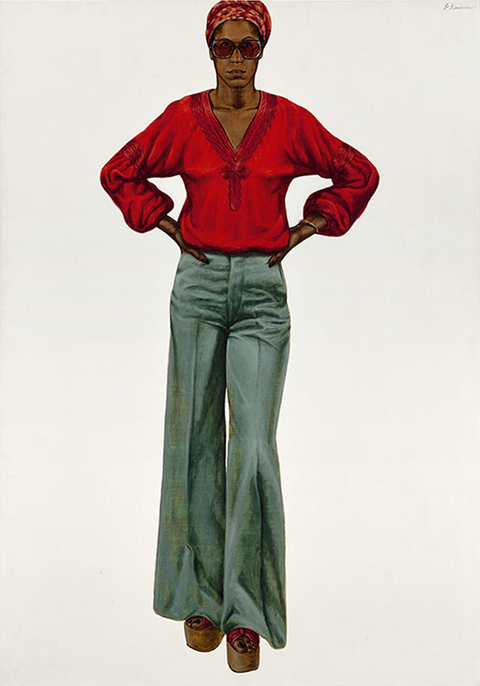
1974
"Brenda P" is a commanding portrait by Barkley L. Hendricks, completed in 1974 using oil and acrylic on canvas. Measuring 72 by 50 inches,…